Class support
Review current topics, clarify difficult concepts and work through school assignments.
Online IB Chinese tutoring for Chinese A Language and Literature, Chinese A Literature and Mandarin B, including text analysis, oral practice and writing.
For international school students in Hong Kong and worldwide. Lessons follow the student's course guide, school pace and current learning needs.
Chinese A is a language and literature course for students with strong Chinese proficiency. Language and Literature includes literary and non-literary texts; Literature focuses on literary works. Mandarin B is language acquisition. The right course depends on the student's reading, writing and school placement.
Review current topics, clarify difficult concepts and work through school assignments.
Practise the relevant question types and review answers against the applicable marking guidance.
Plan the work, discuss research choices and receive feedback on drafts against the subject criteria.
| Course | Who it suits | Assessment |
|---|---|---|
| Chinese A: Language and Literature | Students whose strongest language is Chinese; studies literary and non-literary texts | Paper 1 non-literary analysis, Paper 2 comparative essay, individual oral; HL adds the HL essay |
| Chinese A: Literature | Students whose strongest language is Chinese and who prefer literature; studies literary works only | Paper 1 literary analysis, Paper 2 comparative essay, individual oral; HL adds the HL essay |
| Mandarin B | Students learning Chinese as an additional language with some prior study | Writing 25%, listening and reading 50%, individual oral 25% |
Paper 1 uses unseen texts. Practise a fixed order of attack: text type and audience, purpose, language and structural features, effect, and then one clear central argument.
The comparative essay can only use works you have studied. Prepare themes, characters, key passages and quotations for each work so that in the exam you choose two and build the comparison, rather than trying to remember details.
The individual oral links one literary work and one non-literary body of work (or two works) through a single global issue. Choose an issue that is specific and that both texts can sustain, with extracts rich enough for ten minutes of analysis.
Paper 1 asks for a specific text type, such as a blog, email, speech or report. Each has its own format, register and audience; get the text type right before adding more varied vocabulary and structures.
The individual oral starts with a presentation on a visual stimulus (a literary extract at HL), followed by conversation with the teacher. Rehearse that sequence under time, especially answering follow-up questions and extending the conversation.
Students whose strongest language is Chinese and who can read complete literary works take an A course; students learning Chinese as an additional language take B. Within A, choose Language and Literature if you enjoy non-literary texts such as adverts, journalism and speeches, and Literature if you prefer literary works. HL adds the HL essay and more reading and suits students heading for literature, languages, media or law. Follow your school's offer and each university's requirements.
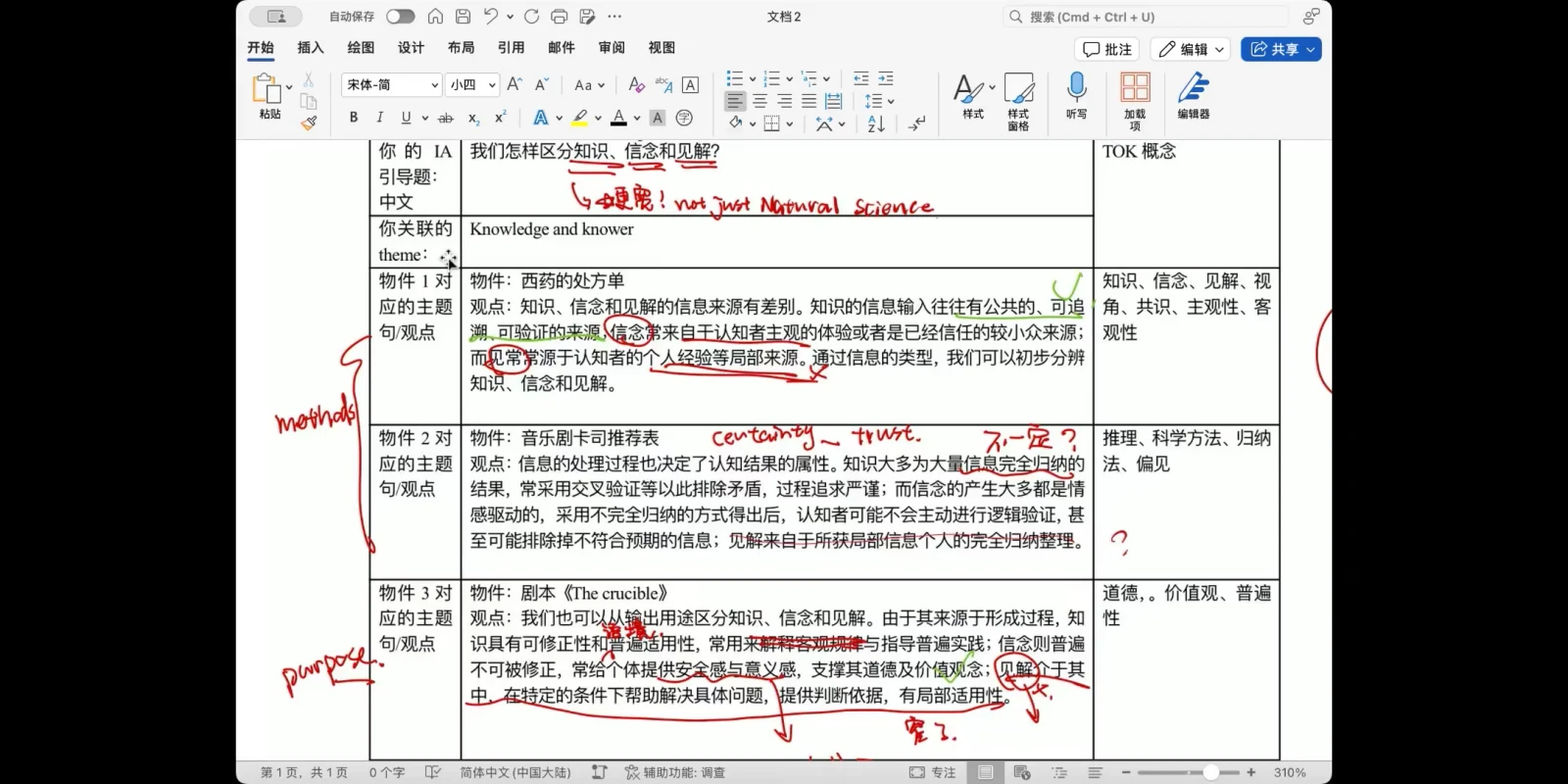
Use the rubric and lesson annotations to develop clear explanations of knowledge, belief and understanding.
Chinese A is a literature and language study course for students whose strongest language is Chinese. Mandarin B is language acquisition. A student who can read and analyse full Chinese literary works may be ready for A; school placement requirements should guide the final choice.
Language and Literature studies literary works alongside non-literary texts such as news, advertising and images. Literature focuses on literary works. Both include Paper 1, Paper 2 and the individual oral; HL also includes an HL essay.
The student discusses a global issue through an extract from a studied work for about 10 minutes. It contributes 30% at SL and 20% at HL.
Paper 1 writing contributes 25%, Paper 2 listening and reading 50%, and the individual oral 25%. The revised Language B course is scheduled for first examination in May 2029; the assessment structure remains the same.